Follow Garden Park through observation, restoration, planting, harvest, community exchange, and reflection. Each entry preserves what the site and its stewards taught us.
Garden Park · Milwaukee, Wisconsin · YAGI School of Ecology
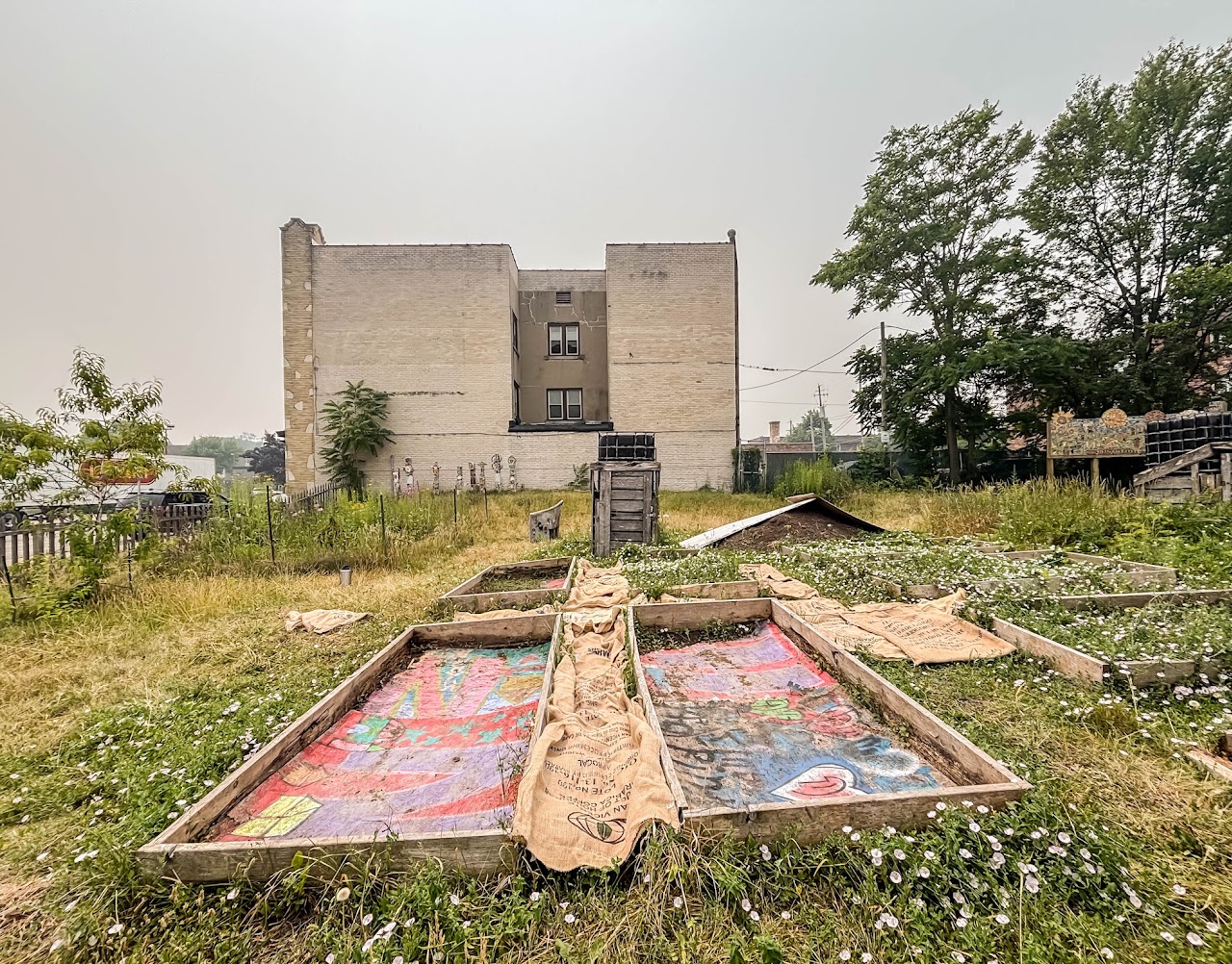
Opening chapter · early site conditions · 2026
“Every observation becomes part of our curriculum. Every lesson becomes part of our tradition. Every steward becomes both a learner and a teacher.”The YAGI Field Guide, Version 3.0 · Living Educational Edition
Read the Season
A journal thread in many voices.
Choose a lens or follow the complete thread. Open any note to read its source, lesson, and place in the evolving field guide.
01
Field Guide Foundation · 2026
Yogic Reflection
Before action, relationship.
“The land is not empty. It is already teaching us. Our responsibility is to learn how to listen.”
YAGI begins with observation rather than control. Soil, water, weather, plants, animals, neighbors, and prior histories are treated as active participants in the curriculum.
Before restoration · the neighborhood becomes the campus.
02
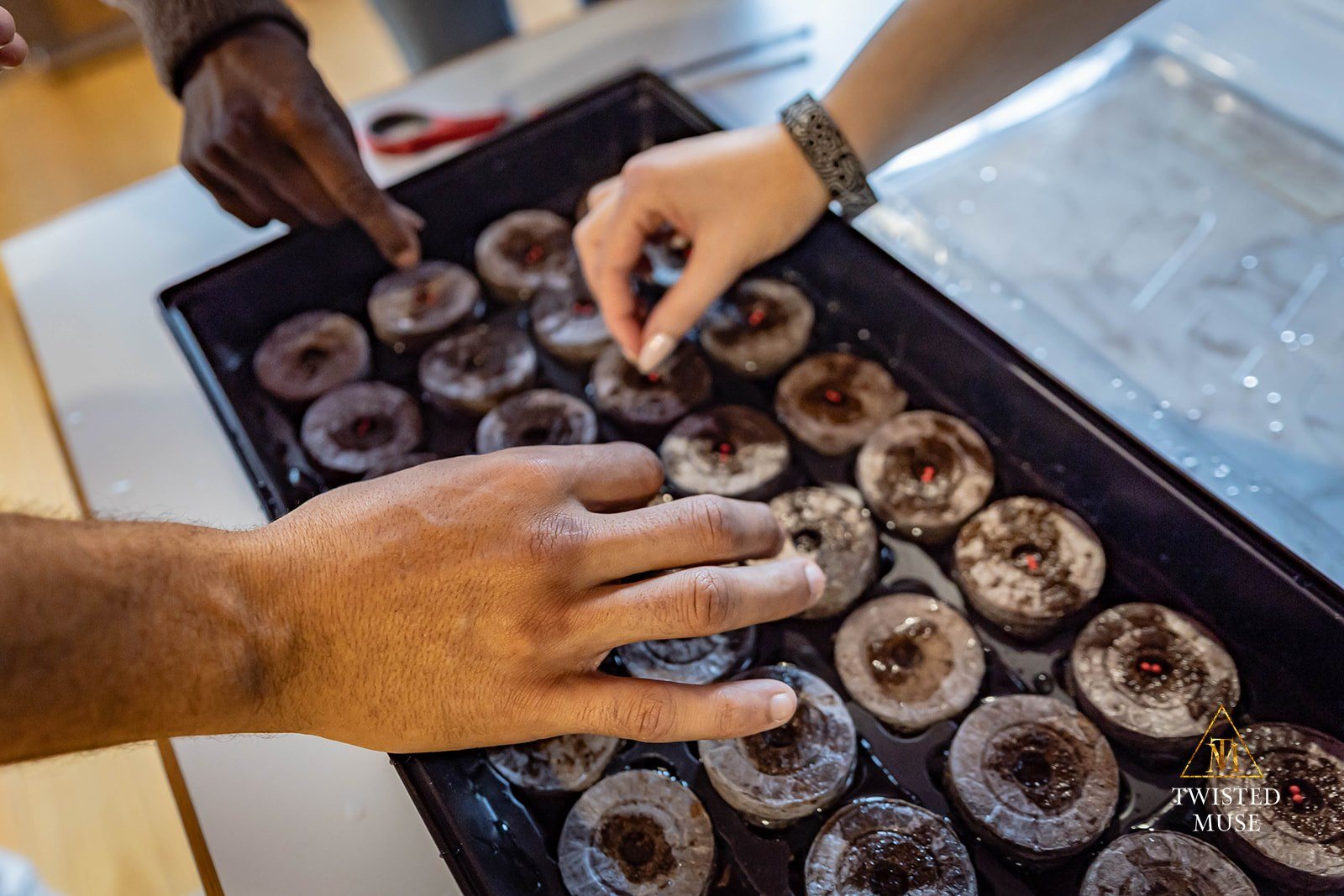
March 17 & April 1 · Seed Starting
Steward Narrative
The garden began before the beds.
“The main goal is to sow seeds for the YAGI garden soon to be coming to life in summer 2026.”
Site Operations Lead · YAGI Workshops Journal
What was planted?
Bell peppers, jalapeños, tomatoes, tomatillos, broccoli, collard greens, kale, basil, marigolds, and cucumbers were recorded across the two workshops.
Seeds become both material and lesson.
03
June 10 · Food Not Bombs Volunteer Day
Community Knowledge
Five people, four cleared beds.
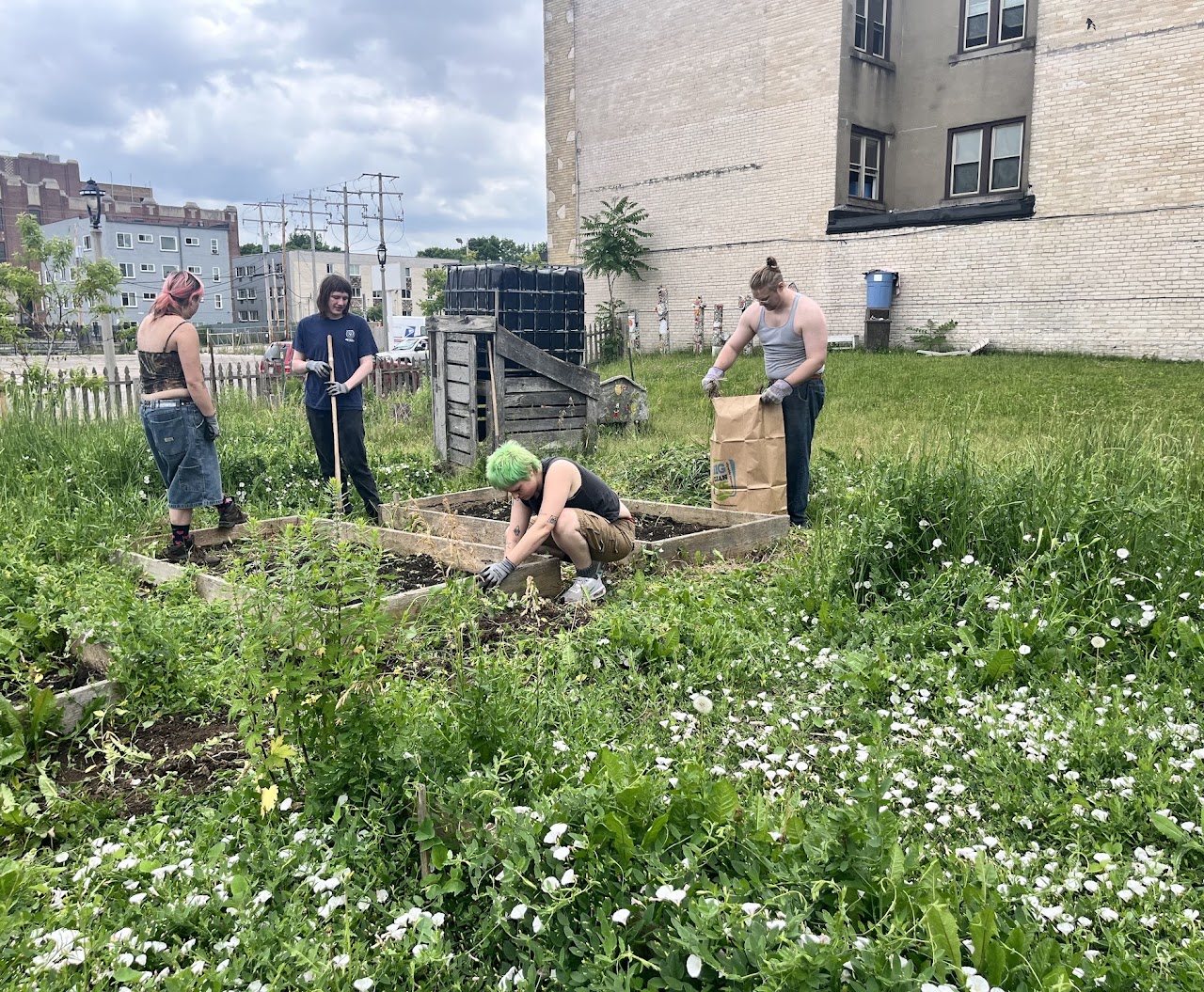
“Four beds are clear, ready for the next steps. Two other beds have been started.”
Site Operations Lead · YAGI Workshops Journal · Food Not Bombs workday record
What this taught the team
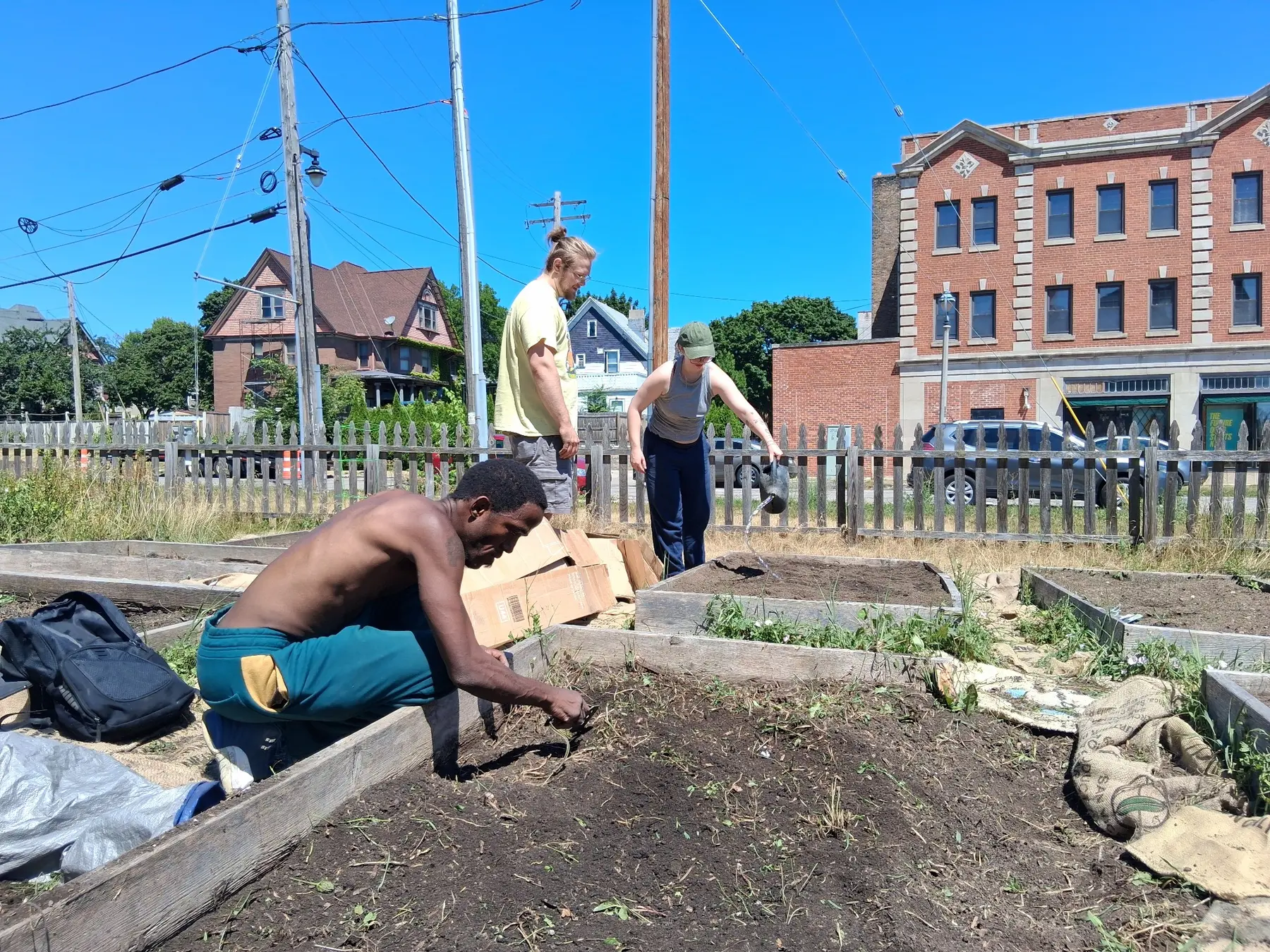
Three Food Not Bombs volunteers joined two YAGI stewards. Together they used garden hoes and shovels to clear weeds and prepare the beds for planting.
Food Not Bombs day · five people working across the beds.
04
Field Guide · Chapter One
Field Guide Passage
“The soil participates. The rain participates. The sun participates. Seeds participate. Pollinators participate. Microorganisms participate. Time participates. The community participates. The steward participates.”
The YAGI Field Guide, Version 3.0 · “Yoking Ourselves to Creation”
05
June 26 · Clearing & Repair
Field Observation
Care includes what the garden inherits.
“Upon arriving we noticed the fence had been broken in a new spot and more trash was there even though we had cleaned it up several times before.”
Site Operations Lead · YAGI Workshops Journal
Workday record
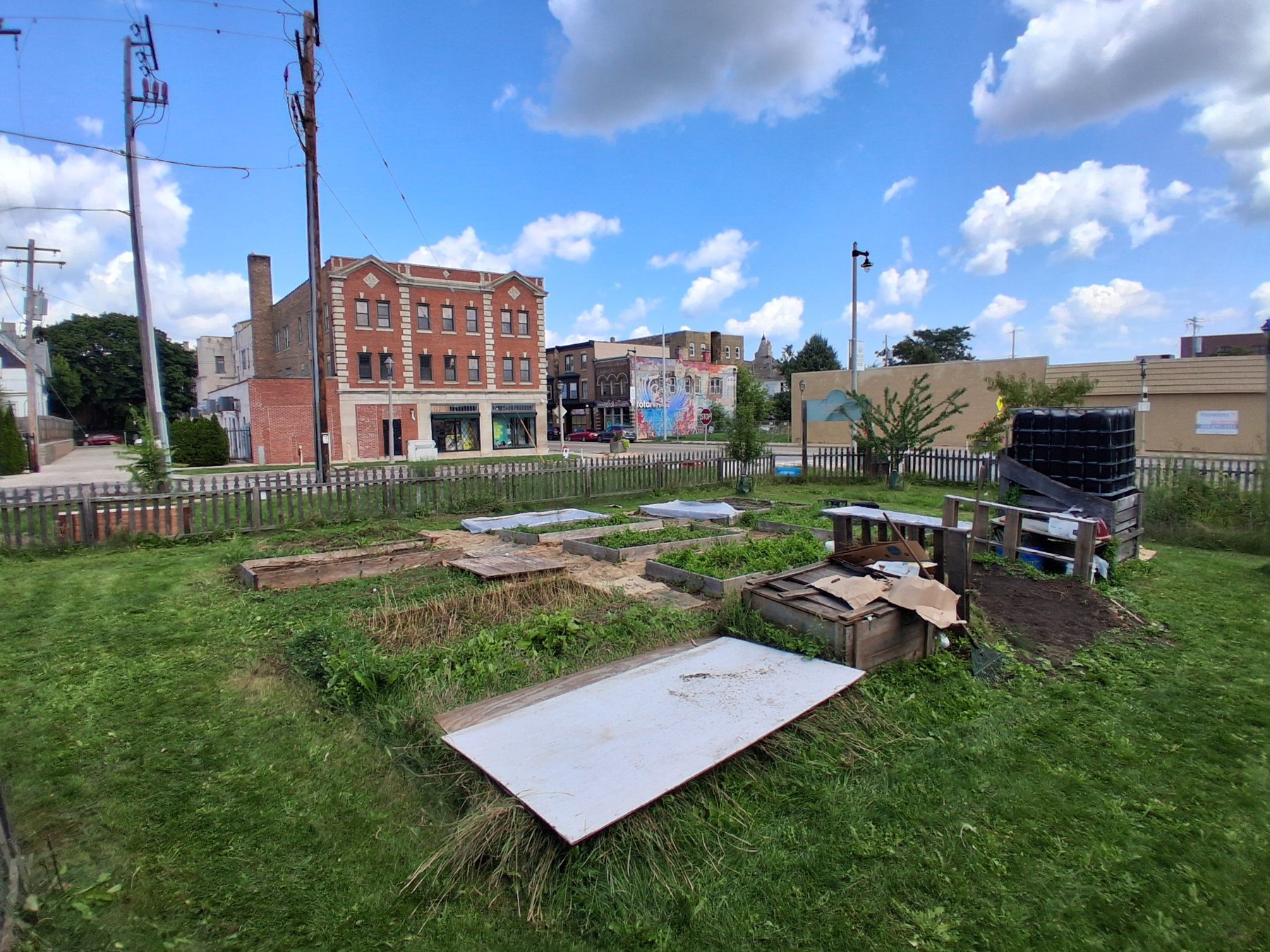
Three YAGI stewards cleared three beds, removed straw and trash, and continued learning what ongoing site care requires.
Later progress · the archive keeps challenges and improvements visible.
06
July 2 · A Presence Takes Root
Steward Narrative
Stewardship cultivates unity.
“We work together across backgrounds, races, ethnicities, faiths, and beliefs—cultivating unity through shared care for the land and one another.”
Site Operations Lead · YAGI Workshops Journal
Community connection
The workday also included meeting Barb at Near West Side Partners. Three packets of wildflower seeds were offered to support the garden’s next chapter.
Shared stewardship · volunteers preparing the garden beds together.
07
The Living Archive · Ongoing
Many Forms of Knowledge
The archive has more than one author.
The Founder documents philosophy, program development, and stewardship systems. The Site Operations Lead preserves workdays, volunteer coordination, and field observations. The Arts & Visual Storytelling Lead shapes photography, visual documentation, and community stories. The Community Ecology & Foodways Lead develops meals, resource stewardship, recipes, and garden-to-table learning.
No voice is substituted for another. Direct quotations remain attached to their original records; visual and foodways contributions are credited through the work they document.
No field notes match this lens yet.
The Journal Continues
No garden is ever truly complete.
The Living Archive grows through each season, steward, workday, mistake, harvest, and act of care.